
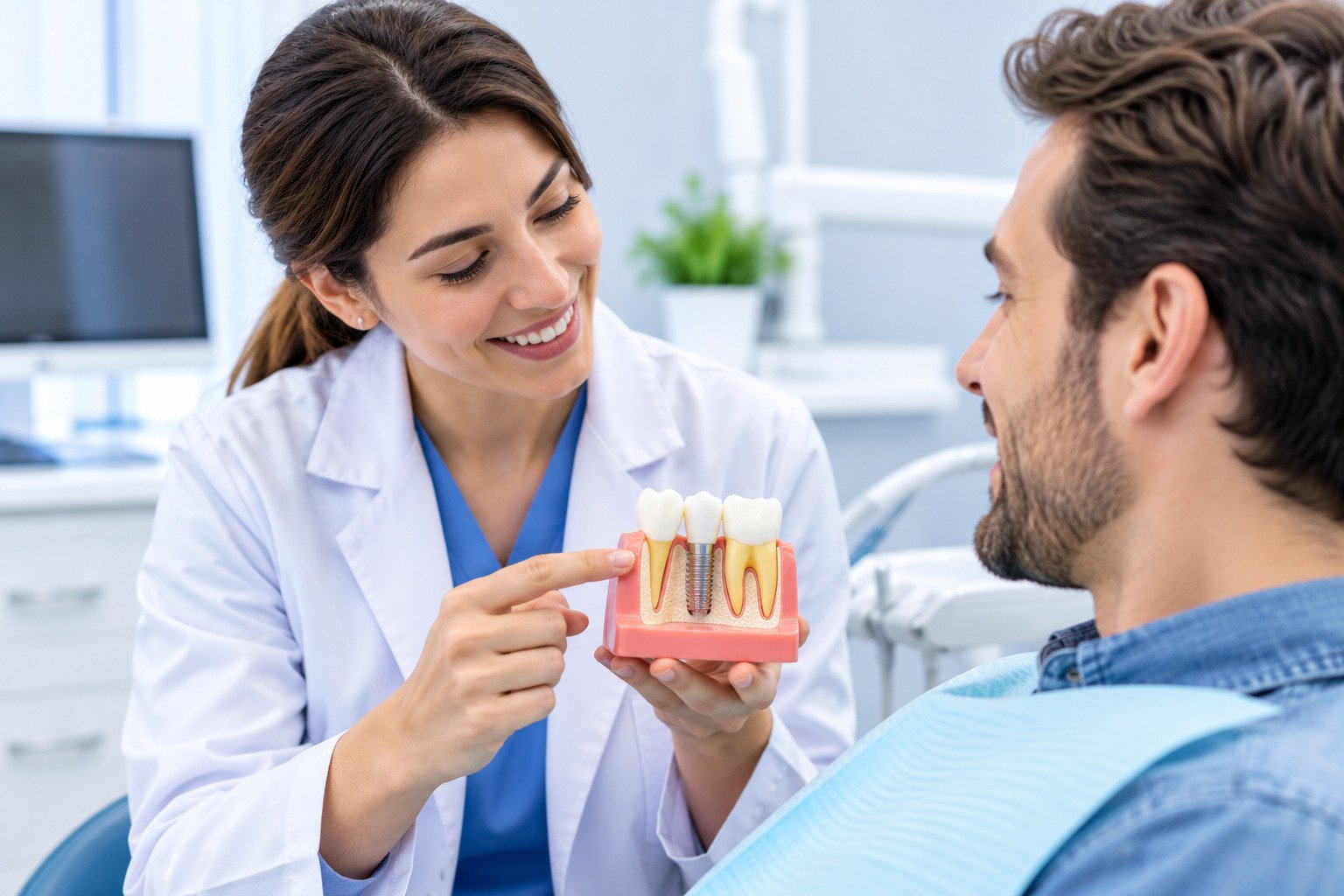
Missing teeth, cracked enamel, and severely damaged teeth can affect more than your appearance. They may also make chewing uncomfortable, affect your bite, and reduce your confidence when smiling. Fortunately, modern restorative dentistry offers solutions that can help rebuild your smile.
If you are researching Dental Implants Raymore, understanding how dental implants and dental crowns work together can help you make informed decisions about your oral health. Both treatments serve different purposes, but they can also work together to replace missing teeth and restore damaged ones.
At Raymore Family Dentistry, patients can explore restorative options designed to improve tooth function, appearance, and comfort.
What Are Dental Implants and How Do They Work?
Dental implants are tooth replacement solutions designed to replace missing natural teeth. A dental implant typically consists of a small titanium post placed into the jawbone, where it gradually integrates with the surrounding bone.
After the healing process, a custom-made dental crown is attached to the implant to create the visible replacement tooth.
A single dental implant generally involves three components:
- Implant post: Acts as an artificial tooth root and is placed in the jawbone.
- Abutment: Connects the implant post to the replacement crown.
- Dental crown: Provides the visible shape and chewing surface of the replacement tooth.
Unlike traditional dental bridges, a single dental implant does not depend on neighboring natural teeth for support.
Why Consider Dental Implants in Raymore, MO?
Losing a tooth can affect everyday activities, including eating, speaking, and smiling. Replacing a missing tooth can help restore these functions and maintain a balanced smile.
Here are some reasons patients may consider dental implants:
1. Replace Missing Teeth
Dental implants provide a fixed replacement option for missing teeth. They can help restore the appearance and function of your smile.
2. Support Natural-Looking Results
A custom dental crown is designed to complement the color, shape, and size of surrounding teeth, helping the replacement blend into your smile.
3. Avoid Using Neighboring Teeth for Support
A single implant is supported by the jawbone rather than adjacent natural teeth. This means neighboring teeth generally do not need to be altered to support the replacement.
4. Help Maintain Bite Function
Replacing a missing tooth can help restore chewing function and support a more balanced bite.
However, dental implants are not suitable for everyone. A dental examination and review of your oral health are necessary to determine whether this treatment is appropriate.
What Is the Role of a Dental Crown in Tooth Restoration?
A dental crown is a custom-made covering that fits over a damaged or weakened tooth. It restores the tooth’s shape, size, strength, and appearance.
A dentist may recommend a crown when a tooth has:
- Extensive decay that requires additional protection.
- Significant damage or cracks.
- A large filling that needs further support.
- Undergone root canal treatment.
- Cosmetic imperfections affecting its appearance.
Dental crowns can also serve as the visible replacement tooth attached to a dental implant.
If you are looking for a Dental Crown Dentist, choosing a professional who evaluates your tooth condition, bite, and restoration needs is important.
Dental Implants vs. Dental Crowns: What Is the Difference?
Although both treatments help restore smiles, they are used for different dental concerns.
| Feature | Dental Implants | Dental Crowns |
| Main purpose | Replace missing teeth | Restore damaged teeth |
| Placement | Jawbone | Existing tooth or implant |
| Support | Implant post | Natural tooth or implant |
| Primary benefit | Tooth replacement | Protection and restoration |
A dental implant replaces the missing tooth root, while a crown restores the visible part of a tooth. When an implant replaces a missing tooth, a crown is often used to complete the restoration.
How Modern Dental Technology Improves Crown Treatment
One important development in restorative dentistry is the use of digital dental imaging and scanning.
Traditional impressions can sometimes feel uncomfortable for patients. Digital scanning offers another way to capture detailed information about the teeth and bite.
Benefits of Digital Dental Imaging
Modern digital dental technology can help with:
- Capturing detailed images of teeth and bite alignment.
- Planning customized restorations.
- Improving the fit of crowns and other dental restorations.
- Helping patients visualize aspects of their treatment.
Raymore Family Dentistry describes using iTero dental imaging for digital scanning and treatment planning. The practice also notes that same-day crown options may be available for qualifying cases.
You can learn more about its dental crowns and bridges services.
What Should You Expect During Dental Implant Treatment?
Dental implant treatment involves several stages. The exact process depends on your oral health, bone condition, and individual treatment plan.
Step 1: Initial Dental Examination
The dentist evaluates your gums, teeth, and jawbone. Imaging may be used to assess the area where the implant is being considered.
Step 2: Treatment Planning
Your dentist discusses whether an implant is suitable and explains the proposed treatment, possible alternatives, and expected healing process.
Step 3: Implant Placement
If you are a suitable candidate, the implant post is placed into the jawbone through a dental procedure.
Step 4: Healing and Integration
The implant needs time to integrate with the surrounding bone. The healing period varies between patients.
Step 5: Crown Placement
Once the implant is ready for restoration, a custom dental crown is attached to complete the replacement tooth.
How Can You Care for Dental Implants and Crowns?
Good oral hygiene plays an important role in maintaining both natural teeth and dental restorations.
Follow these practical tips:
- Brush twice daily using a soft-bristled toothbrush.
- Clean between your teeth daily with floss or an appropriate cleaning aid.
- Avoid chewing extremely hard objects.
- Attend regular dental examinations and professional cleanings.
- Follow your dentist’s instructions for caring for your restoration.
- Contact your dentist if you notice discomfort, looseness, or changes in your bite.
Although implants and crowns are designed for everyday use, they still require proper care and monitoring.
Choosing the Right Dental Care in Raymore
Selecting a dental provider involves more than comparing treatment options. You should also understand the dentist’s approach to diagnosis, treatment planning, restoration materials, and follow-up care.
Before choosing treatment, consider asking:
- Am I a suitable candidate for dental implants?
- Would a dental crown help preserve my natural tooth?
- What restoration options are available?
- Can digital imaging help with my treatment planning?
- What should I expect during healing and recovery?
Raymore Family Dentistry provides information about single dental implants and restorative crown treatments to help patients understand their options.
Conclusion
Dental implants and dental crowns offer different but complementary ways to restore damaged or missing teeth. Implants replace missing tooth roots, while crowns protect weakened teeth and complete implant restorations.
If you are researching Dental Implants Raymore or looking for a reliable Dental Crown Dentist, understanding your treatment options is a helpful first step.
Raymore Family Dentistry offers information about single dental implants, customized crowns, bridges, and digital dental imaging. Schedule a consultation to discuss your dental concerns and find out which restorative options may be appropriate for your smile.
Frequently Asked Questions
1. How do dental implants work?
Dental implants use a titanium post placed in the jawbone to support a replacement tooth. After the implant integrates with the bone, a custom crown can be attached.
2. Can a dental crown be placed on a dental implant?
Yes. A dental crown is commonly attached to a dental implant to replace the visible portion of a missing tooth.
3. How long does dental implant treatment take?
The treatment timeline varies depending on bone health, healing, and individual treatment requirements. Some patients need additional procedures before receiving the final crown.
4. When should I visit a dental crown dentist?
You may need a dental crown evaluation if you have a cracked, weakened, severely decayed, or extensively restored tooth. Your dentist can determine whether a crown is appropriate.
5. Are same-day dental crowns available in Raymore?
Raymore Family Dentistry states that same-day crown options may be available for qualifying cases. Your dentist can confirm whether your treatment is suitable.
6. How do I maintain dental implants and crowns?
Brush and floss daily, attend regular dental checkups, avoid damaging habits, and follow your dentist’s care instructions to help maintain your restorations.
