
General Cleanings & Periodontal Cleanings
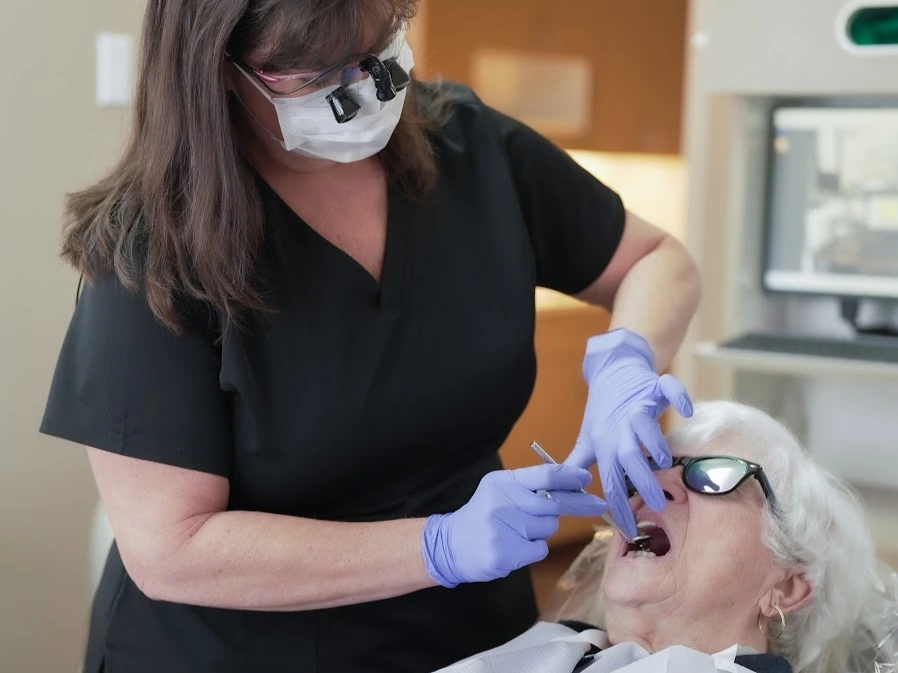
Routine General Cleanings & Periodontal Cleanings include examinations, cleanings, and screenings that help detect issues early. Regular visits are essential for preventing decay, gum disease, and other oral health concerns.
Comprehensive Exams
During each checkup, we perform an exam of your teeth, gums, and mouth. We look for any signs of decay, gum disease, oral cancer, or other issues. Early detection means simpler, less costly treatment.
Professional Cleaning
Our hygienist carefully removes plaque and tartar buildup, especially in hard-to-reach spots. Polishing leaves your teeth feeling fresh and smooth. A fluoride treatment can be applied to strengthen enamel and reduce decay risk.
Digital X-Rays
As needed, we take low-radiation digital X-rays to see between teeth and under the gums. This helps us spot small cavities, bone loss, or impacted teeth that aren’t visible by eye.
Personalized Advice
We’ll review your brushing and flossing technique and recommend tools (like electric toothbrushes or water flossers) if helpful. Dietary advice is given to protect your enamel and gums.
Stay ahead of dental problems by keeping up with appointments. Call 816-322-8080 to book your next checkup. Our team will make sure your visit is thorough yet comfortable.
Contact Information
Mon : 8:00am – 4:00pm
Tues - Wed : 8:00am – 5:00pm
Thursday : 7:30am – 3:30pm
Fri - Sun : Emergency for patients of record
109B S Madison St, Raymore,
MO 64083
816-322-8080
appointments@saadfamilydental.com
General and Periodontal Cleanings in Raymore, MO
Professional dental cleanings are one of the most important things you can do for your oral health. Even with careful brushing and flossing, plaque hardens into tartar that only a dental professional can remove. At Raymore Family Dentistry, our hygiene team provides thorough general cleanings for healthy mouths and periodontal cleanings for patients with gum disease, always with a gentle touch.
Healthy gums hold your teeth firmly in place. When gum disease develops, the gums and bone that support the teeth slowly break down. The right type of cleaning at the right time can stop this process and protect your smile for life.
General (Preventive) Cleanings
A general cleaning, also called a prophylaxis, is designed for patients whose gums are healthy or have only mild inflammation. During this visit your hygienist will:
- Remove plaque and tartar from tooth surfaces and just below the gumline
- Polish your teeth to remove surface stains and smooth the enamel
- Floss between every tooth
- Measure gum pocket depths to monitor gum health
- Apply fluoride when recommended
- Review your home-care routine and answer questions
Most patients need a general cleaning every six months, combined with a complete dental checkup.
Understanding Gum Disease
Gingivitis is the earliest stage of gum disease. Gums may look red or puffy and bleed when you brush or floss. At this stage, the damage is reversible with a professional cleaning and better home care.
Periodontitis develops when inflammation spreads below the gums. Pockets form between the teeth and gums, bacteria collect deep beneath the surface, and the bone that supports the teeth begins to break down. Without treatment, teeth can become loose and may eventually be lost.
Warning Signs of Gum Disease
- Gums that bleed when brushing or flossing
- Red, swollen or tender gums
- Persistent bad breath or a bad taste
- Gums pulling away from the teeth, making teeth look longer
- Loose teeth or a change in how your teeth fit together
- Pus between the teeth and gums
Gum disease is often painless, so many people do not know they have it until a dentist measures their gum pockets.
Periodontal Cleanings (Scaling and Root Planing)
When gum pockets are deeper than normal, a regular cleaning cannot reach the bacteria and tartar below the gums. Scaling and root planing, often called a deep cleaning, removes these deposits from the root surfaces and smooths the roots so the gums can reattach and heal. The area is numbed for comfort, and treatment is often divided into two or more visits.
Periodontal Maintenance
After a deep cleaning, gum disease needs ongoing management, much like other chronic conditions. Periodontal maintenance visits every three to four months clean below the gums, check pocket depths and catch any flare-ups early. Patients who keep up with maintenance are much more likely to keep their teeth for life.
Who Is at Higher Risk for Gum Disease?
- Smokers and tobacco users
- People with diabetes
- Pregnant women, due to hormonal changes
- Patients taking medications that cause dry mouth
- People with a family history of gum disease
- Those who grind or clench their teeth
If you fall into one of these groups, more frequent cleanings may be recommended.
Gum Health and Your Overall Health
Research has linked periodontal disease with other health conditions, including diabetes and heart disease. Inflammation in the mouth can affect the rest of the body, and controlling gum disease can make conditions like diabetes easier to manage. Caring for your gums is caring for your whole health.
Tips for Healthy Gums at Home
- Brush twice a day for two minutes, angling the bristles toward the gumline
- Clean between your teeth daily with floss, interdental brushes or a water flosser
- Use a soft-bristled toothbrush and replace it every three months
- Avoid tobacco
- Eat a balanced diet and limit sugary snacks
- Keep every scheduled cleaning
Insurance and Cost
Preventive cleanings are usually covered at a high level by dental insurance. Deep cleanings and periodontal maintenance are also commonly covered at a basic-service level. We will review your benefits and explain any costs before treatment. Our in-house membership plan helps patients without insurance. See insurance and financing.
Frequently Asked Questions
Why do I need a deep cleaning when I brush every day?
Once tartar forms below the gumline, brushing and flossing cannot remove it. A deep cleaning removes it so your gums can heal.
Is a deep cleaning painful?
We numb the area, so most patients feel only pressure. Gums may be tender for a day or two afterward.
Can gum disease be cured?
Gingivitis can be reversed. Periodontitis can be controlled very effectively with treatment and maintenance, though lost bone does not fully grow back on its own.
How often will I need periodontal maintenance?
Most patients are seen every three to four months, depending on how their gums respond.
Schedule Your Cleaning in Raymore
Keep your gums healthy with regular cleanings at Raymore Family Dentistry, 109B S Madison St, Raymore, MO 64083. New patients call (816) 310-0150, current patients call (816) 322-8080, or book online. Want a brighter smile too? See teeth whitening and cleaning.